



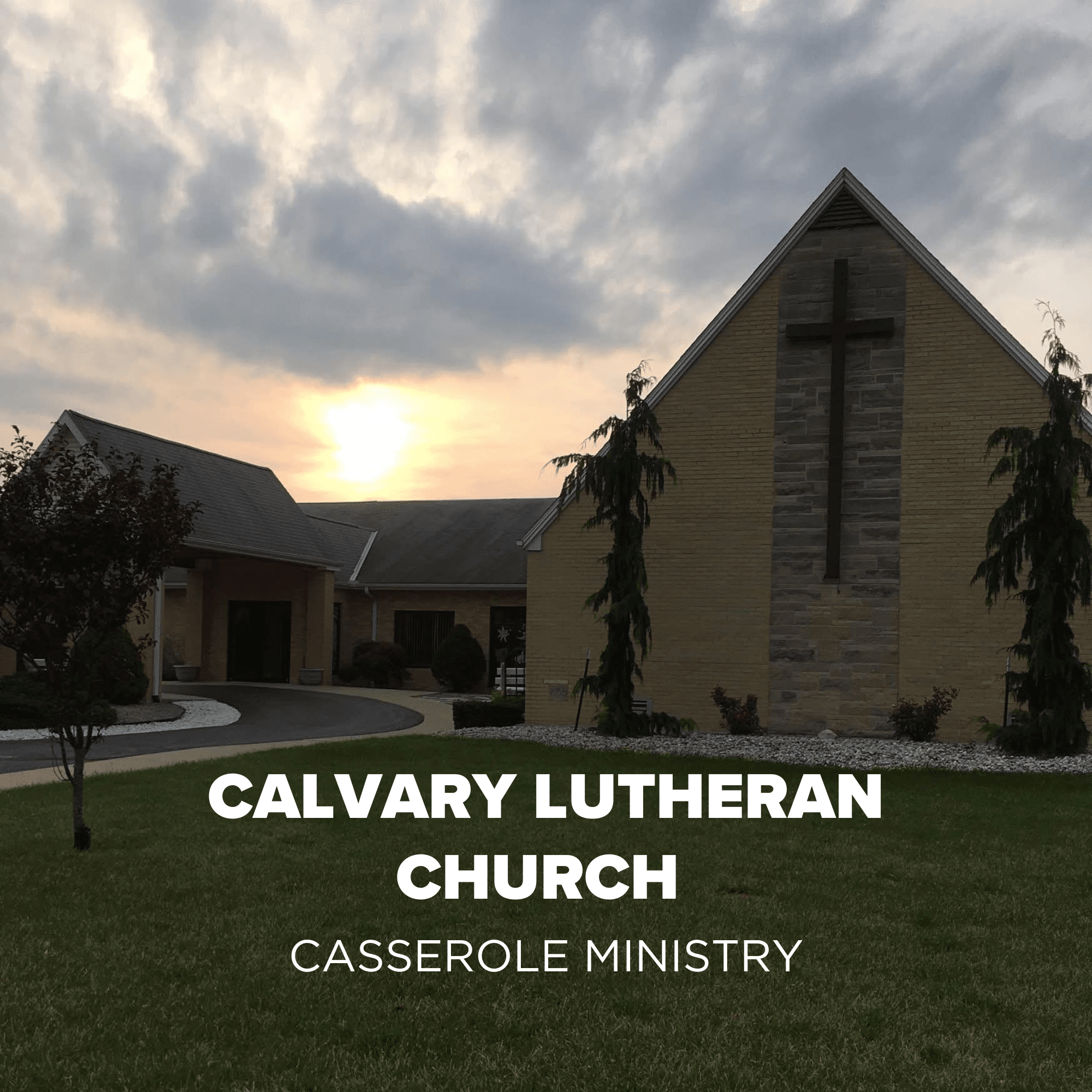
In the kitchen at Calvary Lutheran Church in Angola,Indiana ministry does not always take the form of a worship service or committee meeting. Sometimes it looks like a pan of lasagna, wrapped and labeled, waiting in a basement freezer.
Since 2019, Calvary’s casserole ministry has supported neighbors through a partnership with Angola United Methodist Church. What began as an effort to strengthen existing hunger relief in the community has grown into a steady collaboration that now helps feed about 60 people each week.
As congregations across the synod respond to challenges such as food insecurity, many are finding that effective ministry often grows through partnerships and a willingness to engage directly with their communities.
From the beginning, leaders at Calvary wanted to support, rather than duplicate, the work already taking place in Angola. Two nearby food pantries serve the community: one at Angola United Methodist Church and another through Project Help.
Because Project Help receives government funding and faces stricter guidelines on what it can distribute, Calvary directs store-bought, pre-packaged donations there. Homemade meals are delivered to the Methodist church, which can accept prepared food.
The original plan was communal. Members of Calvary gather to cook together at the church, inviting neighbors from the local homeless shelter, other congregations, and nearby affordable housing communities. Participants would share a meal and then package leftovers for distribution through the Methodist church pantry.
Two or three of these shared cooking events took place before the COVID-19 pandemic halted in-person gatherings.
When those gatherings stopped, the ministry adapted. Volunteers began preparing meals in their own kitchens and delivering them to the church.
Today, the process remains straightforward.
Empty casserole containers are available at the church for volunteers to take home. Participants prepare a meal, package it, and return it to a designated freezer in the church basement. Once a month, a member transports the frozen meals to Angola United Methodist Church, where they are stored and distributed through the church’s weekly pantry.
Families visiting the pantry can pick up a casserole along with nonperishable food items and, at times, frozen pizzas.
About 15 to 20 volunteers regularly participate. Together they prepare roughly 50 to 55 casseroles each month.
Many of the meals come from family recipes. Lasagna is common, along with pasta dishes and other meals that combine meat, cheese, and sauce. For households that may already be cooking in larger batches, preparing an extra casserole can be an easy way to contribute.
The meals are designed to be simple to heat and serve. For families visiting the pantry, that convenience can ease the challenge of planning dinner.
When the pantry at Angola United Methodist Church first began distributing food, it served about 25 to 30 people each week. During the pandemic, the number rose to about 35.
Demand has continued to grow. About two years ago the weekly total increased by another 10 to 15 people. Today the pantry serves roughly 60 individuals each week.
The monthly deliveries from Calvary help maintain that effort. At times, the casseroles allow volunteers at the Methodist church to take a week off from preparing meals themselves.
For Calvary members, the ministry offers a practical way to support neighbors while working alongside another congregation in the community.
Volunteers say the ministry has become part of congregational life. Members often share favorite recipes, and some use Thrivent Action Teams to purchase ingredients such as meat for casseroles.
At congregational dinners, leftover food often prompts a familiar suggestion: save it for the Methodist church.
The partnership also provides feedback from those receiving the meals. Volunteers at Angola United Methodist Church regularly report hearing from families who are relieved to have a ready dinner available when they arrive at the pantry.
